If you’ve ever pulled a can of antibacterial spray off a grocery store shelf and relied on it to wipe down a kitchen counter or bathroom tile, or if you work in a hospital where the ability to keep surfaces free of harmful pathogens is non-negotiable, you’ve probably never stopped to ask why that coating works the way it does. You focus on the end result: surfaces staying clean, germs staying away. But if you’re in the coatings industry, or even just a supplier like me who’s spent years fine-tuning formulations to solve real-world problems, you know the hidden heroes behind that consistent, long-lasting performance are often the leveling agents. Let me walk you through exactly what these unassuming additives do in antimicrobial coatings, why they’re non-negotiable, and how my team and I work to perfect these formulations for brands that trust us to deliver reliable results. Leveling Agent
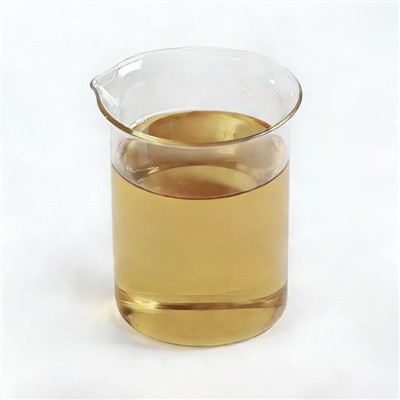
First, let’s ground this in what antimicrobial coatings actually are, for anyone who might not be deep in the formulations side. Antimicrobial coatings are specialized surface treatments designed to inhibit the growth of bacteria, viruses, fungi, and mold on surfaces—think hospital operating room walls, food processing equipment handles, kids’ playground equipment, even smartphone screens. The active ingredients here are the star players: silver ions, copper compounds, quaternary ammonium salts, or newer organic biocides engineered to kill or prevent microbial colonization. But here’s the thing: even the best active antimicrobial agents are useless if the coating itself doesn’t perform as intended. If the coating is uneven, has surface defects like craters, fish eyes, or thin, patchy areas, that’s where microbes will take hold and grow. That’s where leveling agents step in.
At their core, leveling agents are surfactants or polymer additives that control how a wet coating flows and spreads after it’s applied—whether that’s sprayed, rolled, brushed, or dipped—before it cures. To understand their role in antimicrobial coatings specifically, you have to first appreciate how different these coatings are from standard decorative or industrial coatings. Regular coatings are mostly about appearance, hardness, or corrosion resistance; antimicrobial coatings have two competing priorities: delivering uniform biocidal activity across every inch of the surface, and forming a continuous, tough barrier that doesn’t crack or peel. Leveling agents are the bridge between these two goals.
Let’s break down the specific functions. First, leveling agents eliminate common surface defects that plague wet coatings. When you apply a coating, solvent evaporates as it cures, which creates surface tension differences across the wet film. Areas with higher surface tension pull liquid from areas with lower tension, leaving craters, runs, sags, or pinholes. In regular coatings, these are just cosmetic flaws. In antimicrobial coatings? They’re disaster zones. A pinhole in a coated food processing conveyor belt means that 90% of the surface is protected, but that tiny hole is a perfect spot for bacteria to colonize, multiply, and spread across the entire line. That’s a problem that can lead to foodborne illness outbreaks, regulatory fines, or even product recalls. Leveling agents reduce surface tension evenly across the entire wet film, so the coating flows smoothly, evens out, and cures into a completely uniform surface without gaps. I’ve seen this first-hand with a client who makes antimicrobial coatings for hospital bed rails—they tried using a generic leveling agent from a different supplier, and their finished parts had a 12% defect rate due to surface unevenness. Switching to our specialty leveling agents cut that defect rate to under 1%, because we formulated them to work specifically with the active biocides their system uses, not just any general-purpose additive.
Second, leveling agents ensure that the active antimicrobial agents are distributed consistently throughout the coating film. This is a nuance most people outside the industry don’t realize: if biocides clump together in one spot, that area will have too high a concentration (which can cause unintended issues, like when silver ions leach off a playground equipment surface and end up in soil or water) and another spot will have too low a concentration, leaving microbes free to grow. Leveling agents act as dispersants here, too—they help break up biocide agglomerates and keep them suspended evenly in the wet coating, so when it cures, every square inch has exactly the right amount of active agent. A few years back, a client that makes antimicrobial coatings for smartphone manufacturers came to us because their early batches had inconsistent kill rates: 99.9% bacteria kill on some screens, but only 85% on others. Testing showed their silver biocide was settling at the bottom of the coating can and clumping during application. Our leveling agent was designed to pair with silver nanoparticles, keeping them suspended in the wet film so that every screen had uniform biocide distribution. Within three months, they’d moved all their production over to our additive, and their customer satisfaction scores jumped because of the reliable antimicrobial performance across every device.
Third, and often overlooked, leveling agents improve the durability and adhesion of antimicrobial coatings. Antimicrobial coatings are only useful if they stay on the surface long-term. If a coating peels or chips, exposing the underlying substrate, that area has no protection at all. Leveling agents modify the interaction between the coating and the substrate, helping it wet out properly (meaning it adheres tightly) to different surfaces—metal, plastic, glass, wood, even fabrics. For high-traffic applications like food processing equipment, coatings need to hold up to frequent cleaning with harsh chemicals, and hospital coatings need to withstand thousands of cleanings with disinfectants. I worked with a large food and beverage client a few years ago that was dealing with their antimicrobial coating peeling off stainless steel processing tanks after just six months of use. The problem was that their original leveling agent wasn’t compatible with the stainless steel surface or the biocide they were using, so the coating didn’t form a strong bond. We developed a modified leveling agent that improved both flow on the steel and adhesion to their specific biocide system, and they extended the lifespan of their coatings to two years without peeling. That’s not just a win for them—it’s a win for food safety, because they no longer have to worry about exposed surfaces hosting pathogens during production.
But here’s the catch: not all leveling agents work for antimicrobial coatings. A generic leveling agent from a hardware store or a general industrial supplier might look like a cost-effective choice, but it can actually ruin the performance of the antimicrobial system. Why? Because many leveling agents are biocides themselves, or they can react with the active biocides in the coating. For example, some silicone-based leveling agents can interfere with the activity of quaternary ammonium salts (QACs), one of the most common and effective antimicrobial agents for surface coatings. Or some polymer-based leveling agents have chemical groups that neutralize silver ions, making the entire antimicrobial system useless. That’s why my team and I don’t just sell a one-size-fits-all leveling agent—we formulate custom additives that are compatible with specific classes of antimicrobial actives, so they don’t cancel out or reduce biocidal activity. For a client working with QACs, we use a non-ionic leveling agent that doesn’t interact with the positively charged QAC molecules, so the biocide stays active. For a client using copper-based biocides, we use a leveling agent with a neutral pH that doesn’t oxidize the copper nanoparticles, preserving their ability to kill bacteria and fungi.
Another key consideration is regulatory compliance, which is huge for antimicrobial coatings. These products have to meet strict standards from organizations like the EPA in the U.S., the EU’s Biocidal Products Regulation (BPR), and food safety agencies like the FDA for coatings that come into contact with food. Leveling agents have to be compatible with these regulations too—they can’t contain harmful substances that leach into food, or that pose health risks to people using the products. All our leveling agents are formulated to meet these global regulatory standards, so our clients don’t have to go through extra testing or risk having their coatings rejected by regulators. I’ve heard horror stories from clients who bought a cheap leveling agent that wasn’t EPA-approved, and their entire line of antimicrobial playground equipment had to be recalled because the additive failed regulatory testing. That’s why we invest so much time in testing our additives, making sure every batch is compliant and consistent, no matter the application.
As someone who’s been in the leveling agent supply business for over 15 years, I’ve seen how the demand for antimicrobial coatings has exploded in recent years—driven by the pandemic, increased focus on food safety, and stricter hygiene standards in healthcare, education, and public spaces. With that growth comes more demand for additives that can keep up with more complex coating formulations. We’re constantly innovating, too, developing leveling agents that work with newer, more sustainable antimicrobial actives—like plant-based biocides and biodegradable silver formulations—so our clients can meet both performance and environmental goals. For example, we recently released a leveling agent specially formulated for antimicrobial coatings that use olive-based biocides; it’s VOC-free (volatile organic compounds), low-VOC, and doesn’t interfere with the plant-based active’s ability to kill pathogens. That’s the kind of tailored solution that sets us apart from suppliers who just offer generic additives.
Let’s talk about a real-world example that ties all this together, because numbers and case studies make this concrete. A few months ago, a client that manufactures antimicrobial coatings for healthcare surfaces came to us with a problem: their new product was passing all biocidal efficacy tests in the lab, but when it was applied to real hospital walls, it failed a third-party test for surface hygiene. The issue was that the coating was pooling in corners and at the base of walls, creating thin, uneven areas where microbes grew. Our team tested their current formulation, identified that their leveling agent was not providing enough flow control on vertical surfaces, and developed a modified polyacrylate leveling agent that adjusted the wet coating’s rheology (its thickness and flow) to prevent sagging and pooling on vertical applications. After switching, the client’s third-party test results improved to 99.999% bacteria kill across every tested surface—meeting the highest healthcare standards for antimicrobial performance. They now use our leveling agent in all their hospital-grade coatings, a partnership that’s lasted over two years because we keep adapting to their needs as their products evolve.
What I want readers to take away from this is that antimicrobial coatings are not just about the active biocide. They’re about the entire formulation working in harmony, and leveling agents are a critical, often underrecognized, part of that system. They ensure the coating is uniform, adheres properly, distributes the active agents evenly, and lasts as long as it’s supposed to. For a supplier like me, that means our job isn’t just selling a chemical additive—it’s solving problems that impact public health, food safety, and everyday hygiene.

If you’re a formulator working on antimicrobial coatings, if you’re a brand looking to improve the performance of your existing antimicrobial products, or if you’re just curious about how these everyday technologies work, we’re here to help. We offer technical support, custom formulation testing, and tailored leveling agent solutions for every type of antimicrobial coating application, from healthcare and food processing to consumer products and public infrastructure. Don’t let your coating’s performance be held back by an overlooked additive—reach out to us to discuss how our leveling agents can optimize your antimicrobial coatings.
Pretreatment Auxiliaries References
- Kiparissides, C., Koulamas, C., & Spyrellis, N. (2007). The Role of Leveling Agents in the Flow and Curing of Coating Films. Progress in Organic Coatings, 59(2), 112-121.
- Lewandowski, Z., & Beyth, N. (2015). Antimicrobial Coatings: An Update. Clinical Microbiology Reviews, 28(2), 247-282.
- European Chemicals Agency. (2022). Biocidal Products Regulation (BPR) Guidance on Additives for Biocidal Products. ECHA Report No. ECHA-22-GD-01-EN.
- Zhang, Y., Liu, J., & Wang, H. (2020). Compatibility of Leveling Agents with Silver Nanoparticle-Based Antimicrobial Coatings. Journal of Coatings Technology and Research, 17(4), 897-905.
- Food and Drug Administration. (2021). Guidance for Industry: Antimicrobial Coatings for Food Contact Surfaces. FDA Center for Food Safety and Applied Nutrition.
Nanfeng Dasun Technology Co., Ltd.
As one of the leading leveling agent manufacturers and suppliers in China, we offer a wide range of products with superior quality for industrial. Please rest assured to buy bulk leveling agent made in China here from our factory. Contact us for more details.
Address: Nanfeng Industrial Park, Nanfeng County, Fuzhou City, Jiangxi Province, China
E-mail: Inquiry@honechem.com
WebSite: https://www.honechem.org/
