If you’ve ever stood next to a rooftop AC on a cold, frosty morning and watched it suddenly click off for 10 minutes, then roar back to life like nothing happened, you weren’t imagining things. That little “break” it took? That’s the defrost cycle—one of the most underrated, yet totally critical, parts of how rooftop ACs work when the weather gets nippy. As a rooftop AC supplier, I get asked all the time: what even is that cycle, why does it matter, and why does mine sometimes act weird in winter? Let’s break this down like we’re chatting over a coffee, no jargon, just real stuff that matters for your building. Rooftop Air Conditioner

First, let’s keep it simple: rooftop ACs work by moving refrigerant around, right? When it’s warm out, the system pulls heat from inside your building, dumps that heat outside, and blows cool air back in. But when the temperature drops below like 50°F (10°C), that outdoor unit (the big box sitting on your roof) gets cold enough that moisture in the air starts to turn into ice on its coils. Think of when your fridge’s back wall frosts up in the freezer—same exact idea, just way bigger and on top of a building. That ice buildup is a problem because it blocks air flow over the coils. Less air flow means the AC can’t pull heat from inside properly, it works way harder, and eventually it might even stop cooling or heating altogether (wait, yeah—most rooftop ACs these days are heat pumps, so they do both cool and warm air). So the defrost cycle is the system’s way of melting that ice automatically, no human needed.
Here’s how it actually works, the basic nuts and bolts that I’ve seen a hundred times when we service our units: during normal heating mode, the refrigerant flows through the outdoor coils as a super cold liquid (way below freezing, like 20-30°F even in mild temps). That liquid absorbs heat from the air blowing over the coils, turns into a gas, and heads back inside to blow warm air through your ducts. But when ice forms, it acts like an insulator—so the refrigerant in the coils gets even colder, and the pressure on the outdoor side drops. That’s the trigger for the defrost cycle. Most units have tiny sensors (called pressure transducers or thermistors, but I just call them “little checkers”) that track two things: how cold the coils are, and how long it’s been since the last defrost. Once the coils hit a set temperature (usually around 20°F, give or take a few degrees depending on the model) and enough time has passed (like 30-60 minutes of heating), the system flips a switch.
What happens during that flip? It reverses the refrigerant flow. Normally, the refrigerant goes outside as liquid and inside as gas for heat. During defrost, it reverses—so the hot, high-pressure gas that’s usually sent inside to warm your building gets sent to the outdoor coils instead. That hot gas melts the ice, usually in like 2-8 minutes. At the same time, the fan on the outdoor unit shuts off—if it kept running, it’d blow cold air on top of the melting ice, making it worse. I know that sounds annoying, but it’s temporary, and way better than the fan running with ice clogging everything.
Wait, but how does the AC not blow cold air inside during defrost? Because when it reverses the flow, the system doesn’t have warm air to send through your ducts. Most rooftop ACs (especially the ones we supply) have a small reserve of warm air trapped in the ducts during defrost—they just push that remaining warm air out, then the vents might blow a little neutral air for a few minutes. Some newer models have a “hot gas bypass” feature that cuts down on how much cold air comes inside, but even if you feel a tiny chill, that’s way better than having ice build up so bad the AC stops working for hours.
Now, let’s talk about when this cycle actually runs, because I see so many people confused about this. It only runs when the rooftop AC is in heating mode, right? If you’re running cool air in 70°F weather, the outdoor coils are warm enough that ice never forms—so no defrost cycle. That’s a common mix-up I get: someone texts me saying their AC keeps turning off in summer, and I have to explain that’s totally different, that’s not defrost, that’s probably a filter change. Defrost only kicks in when you’re heating, and when the outdoor temp is below around 40°F, and there’s enough humidity in the air to make ice. If it’s below 20°F and super dry, you might not even get ice, so the defrost cycle will run way less often, or not at all.
But here’s the thing that trips up a lot of building managers: not all defrost cycles are the same. We’ve tested three different types on our units, and each has pros and cons. The first is time-based defrost—old-school, runs every 60 minutes for 5 minutes, no matter what. That’s cheap to make, but it wastes a lot of energy because if there’s no ice, it’s just flipping the refrigerant flow for no reason, blowing cold air inside for no good reason. The second is demand-based defrost, which is what most mid-range and our standard models use. The sensors wait for the coils to actually get icy (like 22°F or lower) and only trigger defrost when they need it. That cuts energy use by like 10-15% compared to time-based, which is a big deal when energy costs are crazy high. The third is intelligent defrost, which our premium models have—they hook up to the building’s Wi-Fi, track outside humidity, wind speed, even the building’s heating load, and adjust defrost timing on the fly. If it’s super windy, ice blows off the coils faster, so it runs defrost less. If it’s calm and humid, it runs more. That saves even more energy, and barely any cold air gets inside because it times defrost for when the building’s heating load is low (like mid-morning, when people are at work, not first thing when everyone wants warm air).
Now, what are the signs that your defrost cycle is working, or not working? I see this all the time when customers call for service. First, normal signs: the outdoor unit’s fan cuts out for 2-8 minutes, it might sound like it’s humming a little louder (that’s the refrigerant reversing), then the fan kicks back on, and warm air starts blowing from the vents again. That’s all good. Bad signs? If the cycle runs for more than 10 minutes—usually that means there’s a thick layer of ice, or a sensor is broken, so it’s stuck in defrost. If the AC never runs defrost when it’s supposed to, you’ll see a huge block of ice on the outdoor coils, sometimes hanging like icicles 2 feet long—then the AC will stop heating, because ice is blocking air flow. If you feel super cold air blowing from the vents during defrost, that’s normal for older models, but if it keeps blowing cold after defrost is supposed to end, that’s a problem.
Wait, but what about common mistakes people make that mess up the defrost cycle? As a supplier, I can tell you 90% of the issues we see with defrost are from preventable mistakes. First, a dirty air filter. If your indoor filter is clogged, the air flow over the indoor coils is low, so the refrigerant pressure gets all messed up, and the sensors in the outdoor unit can’t tell when there’s ice. Second, overgrown plants around the rooftop unit—if weeds or shrubs are blocking the outdoor air flow, humidity gets trapped, and ice builds up way faster than normal. Third, not sealing the rooftop unit properly. If there are gaps around the base, cold wind blows directly on the coils, making ice form when it shouldn’t. Fourth, setting the thermostat too high in cold weather. If you set your heat to 80°F when it’s 30°F outside, the AC is working nonstop, pulling too much heat, making the coils colder, so ice builds up faster, and the defrost cycle runs nonstop.
Another thing I get asked a lot: does the defrost cycle use more energy? Yeah, it does—by like 5-10% of your total heating energy. But that’s way better than the alternative. If ice builds up, the AC has to work 20-30% harder to push air through the clogged coils, and if it gets bad enough, it might shut down entirely, leaving your building cold for hours. So the tiny energy hit from defrost is worth it to keep your AC running all winter.
Now, let’s talk about things that affect how often the defrost cycle runs. Like I mentioned earlier, outside humidity is huge. If it’s dry cold (like 10°F and low humidity), you might only need defrost once every 2 hours. If it’s wet cold (like 35°F and high humidity, or even a light snow that sticks), you might get defrost every 20 minutes. Wind also plays a role—windy days blow moisture away from the coils, so less ice, fewer defrost cycles. Cloud cover too—cloudy days hold heat near the rooftop, so coils are a little warmer, less ice.
Wait, I should also clear up a myth I hear all the time: people think the defrost cycle is a sign that your AC is broken. No way—every rooftop AC (well, every modern heat pump) has a defrost cycle. If it didn’t, it would die in winter within a day or two. I’ve had customers call panicking because their AC is taking a break, and that’s literally what it’s supposed to do. The only time it’s a problem is if it’s running too long, too often, or not at all.
As someone who’s been supplying rooftop ACs for over 10 years, let me tell you what matters most when it comes to defrost cycles for your business. If you have a small retail space or office, a good demand-based defrost cycle is more than enough—it’s reliable, affordable, and doesn’t waste energy. If you have a warehouse with huge duct systems or a building that needs consistent heating all day, go for intelligent defrost—you’ll save thousands a year on energy, and you won’t have random cold spots when defrost runs. And the #1 thing you can do to keep defrost working right? Regular maintenance: change filters every 1-3 months, trim plants around the rooftop unit, and get a professional to check the sensors once a year. That’s way cheaper than fixing a broken defrost cycle or replacing a AC because of ice damage.
Now, if you’re here because you’re looking for a rooftop AC that works well in cold weather, has a reliable defrost cycle, and doesn’t cost an arm and a leg—hit us up. Whether you need a single unit for a small café or 20 units for a multi-building office park, we’ve got models with defrost tech that’s tested in temperatures as low as -20°F, and our team can help you pick the right size and type for your space. We don’t do those fancy, overpriced gimmicks—just solid defrost cycles that work when you need them, and support that’s available 24/7 if something ever goes wrong.
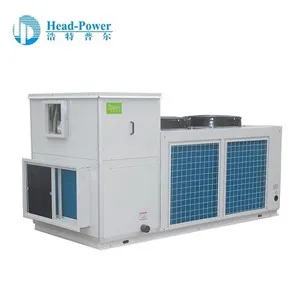
Before I wrap this up, let me just recap real quick so you don’t forget: the defrost cycle is the automated process that melts ice on your rooftop AC’s outdoor coils when it’s cold and humid, it reverses refrigerant flow to send hot gas to the coils, shuts off the outdoor fan, runs for a few minutes, then flips back. It’s normal, it’s necessary, and it’s why your AC doesn’t die every winter. And if you’re in the market for a rooftop AC that handles cold weather like a pro, we’re here to help.
Explosion-proof Air Conditioner References:
- Heating, Ventilating, and Air Conditioning (HVAC) Fundamentals, 7th Edition, American Society of Heating, Refrigerating and Air-Conditioning Engineers (ASHRAE)
- Residential Heat Pump Defrost Cycle Performance: A Field Study, U.S. Department of Energy Office of Energy Efficiency & Renewable Energy, 2021
- Rooftop Unit Operational Best Practices for Cold Climates, Air-Conditioning, Heating, and Refrigeration Institute (AHRI), 2022
- HVAC Sensor Technology for Demand-Based Defrost Control, International Journal of HVAC&R Research, Vol. 28, No. 3, 2022
Guangdong Head-Power Air-Conditioning Co., Ltd.
Guangdong Head-Power Air-Conditioning Co., Ltd. is one of the most professional rooftop air conditioner manufacturers and suppliers in China, specialized in providing high quality products made in China. We warmly welcome you to buy customized rooftop air conditioner at low price from our factory. Contact us for quotation.
Address: Shiling Chenbian Section, 321 National Highway, Shishan Town, Nanhai District, Foshan, Guangdong, China.
E-mail: info@china-headpower.com
WebSite: https://www.headpowerac.com/
