If you’ve ever walked through a busy warehouse—say, a food distribution center restocking dozens of pallets per hour, or a auto parts facility storing bulky engine blocks and metal frames—chances are you’ve come face to face with heavy-duty storage racking, the unsung workhorse of industrial logistics. As a racking supplier, I’ve spent the last 12 years talking to warehouse managers, operations directors, and even the occasional forklift driver who’s told me, “This rack doesn’t just hold stuff—it keeps our shift running on time.” Heavy-duty racking isn’t just a bigger version of the shelving units you use in your garage; it’s a engineered system built to solve specific, high-stakes problems that come with moving and storing thousands of pounds of inventory at a time. Over the years, I’ve noticed that many people new to the industrial space confuse heavy-duty racking with light-duty models, so today I’m breaking down the key features that make this type of racking non-negotiable for high-volume, high-weight operations. Storage Racking
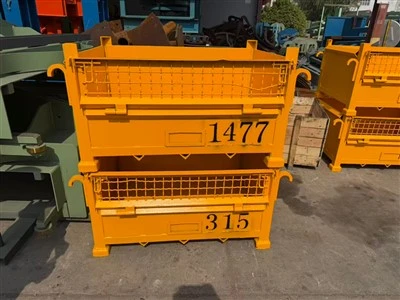
First, let’s start with the most obvious but critical feature: load capacity. Not all heavy-duty racking is built the same, and that’s a line I drive home with every customer I work with. What defines a heavy-duty rack is its ability to safely hold loads ranging from 2,000 pounds per level up to 10,000 pounds or more, depending on the configuration. For context, a standard light-duty residential shelf might hold 100 to 500 pounds, so heavy-duty rack is designed to handle 4 to 20 times that weight with consistent safety. This isn’t a guess—every component of a heavy-duty rack is calculated during the design phase to meet industry standards, like those set by the Rack Manufacturers Institute (RMI) in the U.S. or FEM in Europe. For example, the vertical posts (the uprights that form the frame of each bay) are made from thick, high-tensile steel, not the thin gauge steel used in light-duty shelving. I’ve seen this first-hand: a customer once tried to use light-duty shelving for storing full pallets of construction bricks, and within three months, the posts bent so badly that the rack started leaning toward the center of the warehouse. When we installed our heavy-duty selective pallet rack, each upright had a reinforced 3-inch flange and a 12-gauge steel core, so even when loaded with 6,000 pounds of bricks per level, it stayed stable. The key here is that load capacity is distributed across every component, not just the beams. The beams that connect two uprights are also built with reinforced connectors (called clips or pins) that lock into the post’s pre-punched slots, creating a rigid joint that doesn’t shift even when a forklift drives past at full speed.
Next, structural integrity and design flexibility for dynamic loading. Unlike static shelving that stays in one place and holds items rarely moved, heavy-duty racking is designed for dynamic use—meaning pallets are being loaded and unloaded multiple times a day, forklifts are navigating between bays, and the whole system is often reconfigured as inventory levels change. A big part of this is the modular design. Most heavy-duty racking systems are made to be disassembled, moved, and rearranged without needing specialized tools. That’s a huge benefit for growing operations: when a customer’s warehouse expands or they change their inventory mix from full pallets to smaller cases, they don’t have to buy an entirely new racking system. They can just move the uprights and beams to adjust the bay widths or heights. But structural integrity isn’t just about being flexible—it’s about withstanding impacts. Warehouses are high-traffic areas, and forklift forks, pallet jacks, and even human error will lead to occasional bumps. Heavy-duty racking has built-in impact protection features that light-duty systems lack. Things like upright protectors—thick, rubber or steel guards that bolt to the base of each post, the part closest to the floor where forklifts are most likely to hit them. I once worked with a cold storage facility that had to deal with even tougher conditions: constant freezing temperatures that make steel more brittle, plus heavy pallets of frozen meat. We installed our heavy-duty racking with galvanized steel uprights (to resist corrosion from moisture in the cold room) and extra-thick impact guards at every base. After three years, their damage rate was less than 2%—a huge improvement from their old system, where they were replacing 10-15 posts a year due to impact damage. Another dynamic design feature is load distribution: heavy-duty racking is engineered to spread weight evenly across the entire frame, not just focused on one spot. That means if you have a 8,000-pound load split into two pallets side by side on a single level, the beams and posts don’t put pressure on one area, which prevents bending or warping over time.
Then there’s safety compliance, a feature that’s non-negotiable for any heavy-duty storage system. I can’t stress this enough: heavy-duty racking isn’t just a piece of equipment—it’s a safety asset that directly protects workers, inventory, and the whole warehouse operation. Compliance with industry standards isn’t optional; it’s required by OSHA in the U.S., HSE in the UK, and similar regulatory bodies around the world. What does that compliance look like in practice? First, all components of a heavy-duty racking system are tested for durability. For example, RMI requires that uprights undergo a racking test, where they’re loaded to 125% of their rated capacity and held for 24 hours to ensure they don’t deform. Beams are tested to withstand 150% of their rated load, plus dynamic loads from forklift contact. Another safety feature is the ability to add additional components that reduce risk. Things like safety barriers between aisles, which prevent forklifts from drifting into the rack bays; pallet supports that keep pallets from sliding off the beams (a common cause of load collapse); and level indicators that make it easy for forklift operators to see how high they can stack pallets. I remember a client who had a near-miss when a pallet of auto parts slid off a beam because there were no pallet supports. We retrofitted their existing heavy-duty rack with custom supports, and now they haven’t had a single slide-related incident in two years. Compliance also means that heavy-duty racking comes with clear load labels on every bay, so managers and operators know exactly how much weight each level can hold. That might seem simple, but you’d be surprised how many warehouse managers ignore these labels to stack more inventory, leading to structural damage and safety risks.
Adaptability for specialized storage needs is another key feature that sets heavy-duty racking apart. Not every operation stores standard 48×40-inch pallets. Some handle long items like pipes or lumber, bulky items like refrigerators or industrial machinery, or even fragile items that need extra support. Heavy-duty racking systems can be customized to fit these unique needs, which is why they’re used across so many industries. For example, cantilever racking is a type of heavy-duty racking designed for long, irregular loads. Instead of vertical bays, cantilever systems have arms that extend from uprights, so you can store pipes, lumber, or even furniture without needing to fit them into standard pallets. We installed a cantilever system for a construction supply company that was storing 20-foot steel pipes; before that, they were stacking pipes on the floor, which took up 30% more space and led to frequent damage from scratches and dents. The cantilever rack held the pipes securely, organized by size, and cut their storage footprint by 25%. Then there’s push-back racking, a heavy-duty system designed for high-density storage of the same product, common in beverage warehouses or grocery distributors. Push-back racks have levels with nested carts that roll back as you load pallets, so you can store multiple pallets of the same SKU without using more aisles. That’s a game-changer for operations that need to maximize storage space without sacrificing access to inventory. Even temperature-controlled environments, like cold storage or freezers, need specialized heavy-duty racking: galvanized or stainless steel components to resist rust from moisture, and coatings that prevent the steel from becoming brittle in freezing temperatures. I once worked with a pharmaceutical warehouse that needed to store temperature-sensitive vaccines, so we built a heavy-duty racking system with integrated temperature sensors mounted on each level, allowing them to monitor conditions without opening the rack or exposing the inventory to outside air.
Durability and long-term cost efficiency might not sound like a “feature” at first, but it’s one of the biggest advantages of investing in heavy-duty racking, especially compared to cheaper, light-duty alternatives. Let’s do a quick math example: a light-duty shelving unit for pallets costs around $500 per bay, but it might only last 5 years before it bends or breaks, requiring full replacement. A heavy-duty racking bay costs $1,500, but with proper maintenance, it can last 20 years or more. I’ve seen customers who tried to save money with cheap racking end up spending three times as much on repairs, damaged inventory, and even workers’ compensation claims after a rack collapsed. Heavy-duty racking requires minimal maintenance, too. Unlike light-duty systems, which might need regular tightening of bolts and replacement of bent parts, heavy-duty systems are built to withstand wear and tear. The only regular maintenance needed is inspecting uprights for impact damage, checking that beam clips are secure, and cleaning the rack to prevent corrosion in humid environments. That low upkeep translates to less downtime, which is critical for warehouses that run 24/7. For example, a client of mine that runs a 24-hour e-commerce fulfillment center had their old light-duty racking fail during a peak holiday season, leading to a 12-hour shutdown that cost them over $100,000 in lost orders. After switching to our heavy-duty selective pallet rack, they haven’t had a single unplanned shutdown due to rack damage in four years, even during peak periods.
At the end of the day, heavy-duty storage racking is about solving problems that small shelving just can’t. It’s built to hold the weight, adapt to your space and inventory, keep your workers safe, and save you money in the long run. If you’re looking to upgrade your warehouse’s storage system, or you’re not sure if your current racking is up to the demands of your operation, I’m here to help. We work with operations of all sizes, from small distribution centers to large manufacturing facilities, to design custom heavy-duty racking systems that fit your specific needs, budget, and safety requirements. Don’t wait for a rack failure or a safety incident to address your storage needs—reach out to us to discuss how we can optimize your warehouse space and keep your operations running smoothly.
Storage Racking References
Rack Manufacturers Institute. (2020). Standard for the Safety of Pallet Racking Systems, ANSI/RMI MH 16.1.
Occupational Safety and Health Administration. (2022). Warehouse Safety Guidelines for Storage Racking.
European Materials Handling Federation. (2021). FEM Standard for Heavy-Duty Storage Racking, FEM 10.2.03.
Qingdao Shuoxin Storage Equipment Co., Ltd.
As one of the most professional storage racking manufacturers and suppliers in China, we’re featured by quality products and good price. Please rest assured to buy customized storage racking made in China here from our factory. Welcome to contact us for quotation.
Address: No.15 Guangdong Road, Jiaobei Subdistrict, Jiaozhou City, Shandong Province, China
E-mail: 13791964777@163.com
WebSite: https://www.shuoxinrack.com/
